

NEWS
From Insight to Action: Key Takeaways from Our Golden Ticket


On August 18, leaders representing education, business, workforce development, philanthropy, research, and public policy gathered to explore an important question: How can the Inland Empire better connect educational attainment, talent development, and economic opportunity?
The Inland Empire is central to California’s future prosperity.
That opportunity came into focus during Our Golden Ticket: California’s Future Runs Through the Inland Empire, a regional convening hosted by College Futures Foundation and Growing Inland Achievement on August 18 at the Riverside Art Museum.
The event was part of College Futures Foundation’s statewide Our Golden Ticket campaign and regional roadshow, which is bringing new research from the Georgetown University Center on Education and the Workforce directly to communities across California. Developed in partnership with College Futures Foundation, the research examines the extraordinary economic gains California could realize by reaching 70% postsecondary attainment across all demographic groups.
Each stop on the roadshow creates an opportunity to move beyond the statewide findings and examine what the data mean within a specific region. In the Inland Empire, that meant bringing together nearly 100 leaders from education, business, workforce development, philanthropy, research, and public policy to explore how greater educational attainment could strengthen the region’s talent pipeline, expand economic mobility, and create shared prosperity.
The potential impact is significant. California could generate an estimated $4.4 trillion in economic gains by reaching the 70% attainment goal. More than $1 trillion of that potential impact could be realized in the Inland Empire alone.
The convening helped translate those numbers into a regional conversation about action. Participants considered how the Inland Empire can re-engage adult learners, create clearer pathways to credentials of value, strengthen alignment between education and employers, and ensure postsecondary education leads to meaningful careers and economic mobility.
Achieving that vision will require more than any single institution, organization, or sector can accomplish alone. It will require coordinated action grounded in research, shaped by regional realities, and centered on the needs and aspirations of learners.
Event Highlight Video
Setting the Stage for Regional Action
Dr. Ashish Vaidya, president and CEO of Growing Inland Achievement; Eloy Ortiz Oakley, president and CEO of College Futures Foundation; and Dr. Zack Mabel, director of research at the Georgetown University Center on Education and the Workforce, opened the convening by framing the scale of the opportunity before the region.
Their remarks connected statewide attainment goals with the Inland Empire’s rapidly evolving economy and invited participants to consider the roles they and their organizations play within the region’s education and workforce ecosystem.

The day was grounded in research, including GIA’s State of Education and Talent findings and its recent study of Inland Empire adults who attended college but did not complete a credential. Participants also explored new labor-market information through a dashboard developed by the Burning Glass Institute.
Together, these resources helped attendees examine where talent supply and employer demand are aligned, where gaps remain, and which pathways offer the greatest potential value for Inland Empire learners and communities.
A Conversation with Ashish Vaidya and Eloy Ortiz Oakley
Five Key Takeaways
1. The Inland Empire represents one of California’s greatest opportunities.
The Inland Empire continues to create jobs at a strong pace, but growth in educational attainment has not kept up with the region’s expanding workforce needs.
Closing that gap would yield benefits that extend far beyond individual learners. Greater attainment can help employers access the talent they need, strengthen families’ economic mobility, and contribute substantially to California’s long-term prosperity.
With more than $1 trillion in potential regional economic impact connected to reaching the 70% attainment goal, investing in Inland Empire learners is also an investment in California’s future.
2. Attainment must be connected to value.
Reaching an attainment goal is not simply about producing more degrees and credentials. It is about helping learners pursue pathways that lead to meaningful opportunities.
Participants examined how credentials align with workforce demand, wages, career advancement, and long-term economic mobility. They also discussed the importance of preparing learners not only for their first job, but for their next job and, ultimately, their best job.
The conversation reinforced the idea that value cannot be defined solely by economic data. Learners also consider whether a career will provide personal fulfillment, stability, and the ability to support themselves and their families.
Creating greater transparency around career pathways, expected salaries, advancement opportunities, and the education required to enter a field can help people make informed decisions about their futures.

3. Adult learners are essential to reaching the region’s goals.
Nearly 700,000 Inland Empire adults have attended college but have not earned a degree. Supporting those who want to return and complete a credential represents one of the region’s most immediate opportunities to increase attainment.
GIA’s recent research found that returning adults need more than encouragement. They need institutions and systems designed around the realities of their lives, including work, family responsibilities, financial pressures, and uncertainty about whether returning to college will yield meaningful benefits.
Re-engaging adult learners will require clear information, flexible pathways, personalized support, and credentials that connect to genuine economic opportunity.
Read GIA’s report, “Student Voices, System Changes: What Inland Empire Adults Say They Need to Succeed in College”
4. Employers must be active partners in building talent pathways.
Employers have an important role to play in helping learners understand where opportunities exist and what it takes to pursue them.
Throughout the day, participants emphasized the need for employers to clearly communicate their talent needs, provide greater transparency about wages and advancement, and work alongside education and workforce partners to create accessible pathways into high-demand careers.
Examples shared during the convening demonstrated that progress is possible when employers take ownership of the challenge, listen to their partners, and focus on a small number of achievable priorities.
That begins with listening to employers’ challenges rather than assuming the region already understands them. It also requires listening to learners, whose experiences and aspirations must remain at the center of pathway design.
5. Progress will require focused collaboration across the region.
No institution, employer, organization, or sector can achieve the 70% attainment goal alone.
The Inland Empire must respond to the urgency and scale of the challenge by working together, combining regional knowledge with reliable data and focusing on the areas where collaboration can produce measurable progress.
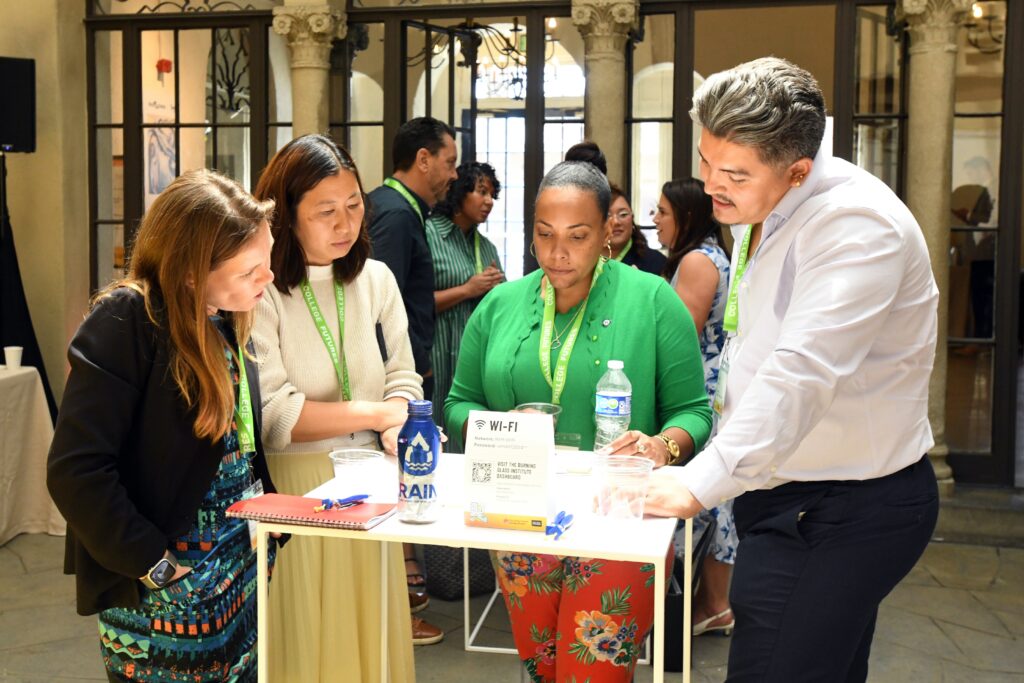
During the afternoon action labs, attendees worked across sectors to identify opportunities in three priority areas:
- Re-engaging adult learners
- Expanding employer-aligned pathways and work-based learning
- Strengthening healthcare talent pathways
Rather than attempting to solve every challenge at once, participants were encouraged to identify two or three areas where coordinated action could make a meaningful difference.
The conversations demonstrated both the complexity of the work and the willingness of regional leaders to take greater shared responsibility for advancing it.
Event Photos

What Comes Next
The convening was designed to move beyond discussion and toward regional commitments.
Growing Inland Achievement will review the insights, priorities, and potential actions identified during the action labs. GIA will work with College Futures Foundation and regional partners to determine where alignment already exists, where additional partners are needed, and which ideas offer the strongest opportunities for collective action.
The work ahead must remain grounded in research, informed by employers, and centered on the lived experiences and aspirations of learners.
The Inland Empire has the talent, expertise, and collaborative spirit needed to make meaningful progress. Realizing the region’s full potential, however, will require all of us to work together with urgency, focus, and a shared commitment to creating greater value for learners, employers, and communities.
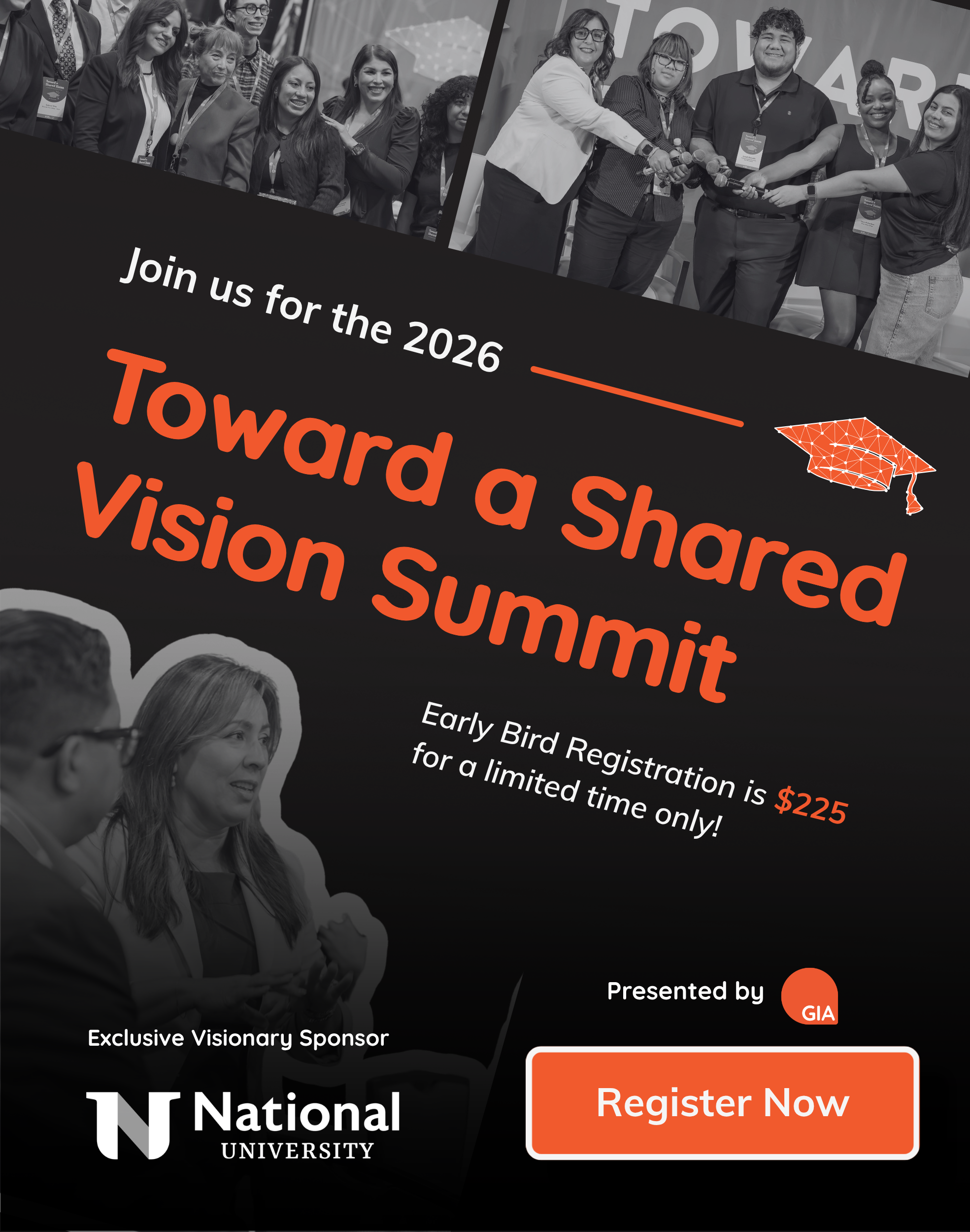
Our Golden Ticket represented an important step in that direction. The next step is turning what we learned into action. Regional collaboration and conversations will continue at GIA’s annual Toward a Shared Vision Summit in Riverside, CA on November 4-5.
UPCOMING EVENTS
RECENT NEWS
- Award-Winning PBS Documentary The Class Comes to the Inland Empire for Special CSUSB Screening
- From Insight to Action: Key Takeaways from Our Golden Ticket
- What California’s Historic Education Budget Means for the Inland Empire
- Growing Inland Achievement Receives Grant to Strengthen Purposeful Pathways in the Inland Empire
- Regional Leaders Convene to Review GIA Report on The State of Education & Talent in the Inland Empire